
Steel isn't a manufacturer. Concrete isn't a manufacturer. And TPV isn't a manufacturer either.
Nobody would write "steel" on a structural drawing and consider the material specified. Yet wetpour specifications do exactly that every day: a material category — "EPDM", "TPV", "SBR" — written on a spec line as if it were a product. This article is about what those three-letter labels actually tell you, what they don't, and the questions that close the gap.
What a category name tells you — and what it doesn't
A category name tells you which broad material family a granule belongs to. That's genuinely useful — the families behave differently, and choosing between them is a real decision.
What it doesn't tell you is almost everything that determines how the surface will behave over its life:
| The category name doesn't tell you… | …or this |
|---|---|
| Polymer content and type | Filler content and selection |
| Pigment and additive system | Manufacturing and cure process |
| Granule density and geometry | Surface texture and binder demand |
| Binder compatibility | UV and heat resistance |
| Batch-to-batch consistency | Long-term installed performance |
Take EPDM, the most common example. There are hundreds of EPDM granule producers worldwide, and a wetpour EPDM granule is typically mostly fillers and oils — often only 15–25% of it is actually rubber. Two granules can both truthfully say "EPDM" on the bag while differing several-fold in polymer content, and ageing entirely differently as a result. So the useful question was never "is it EPDM?" It's whose EPDM — and what's in it?
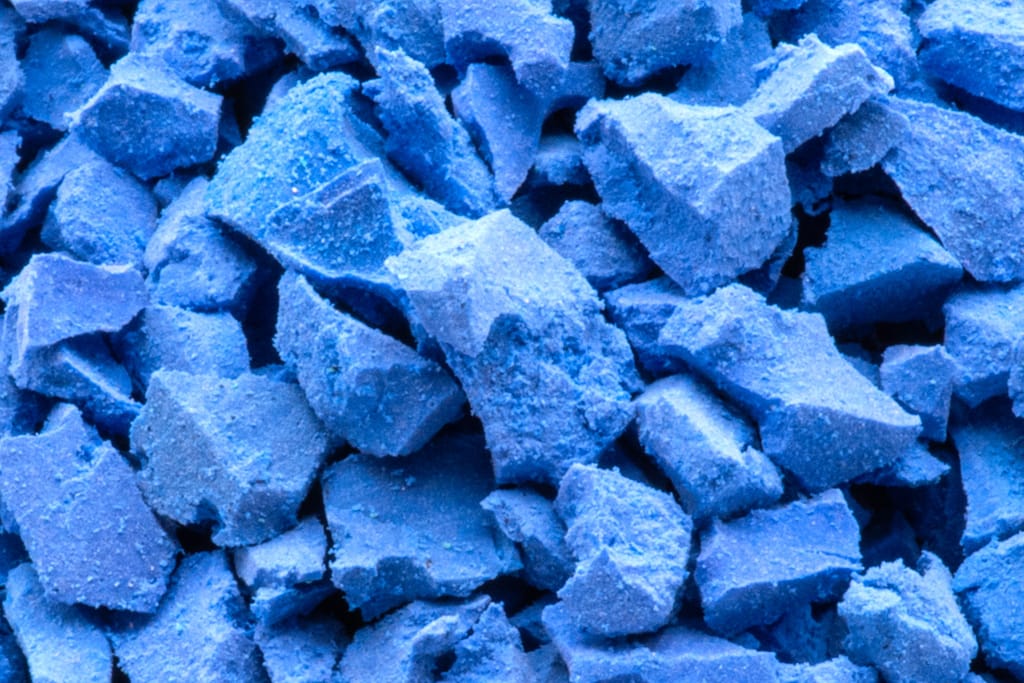
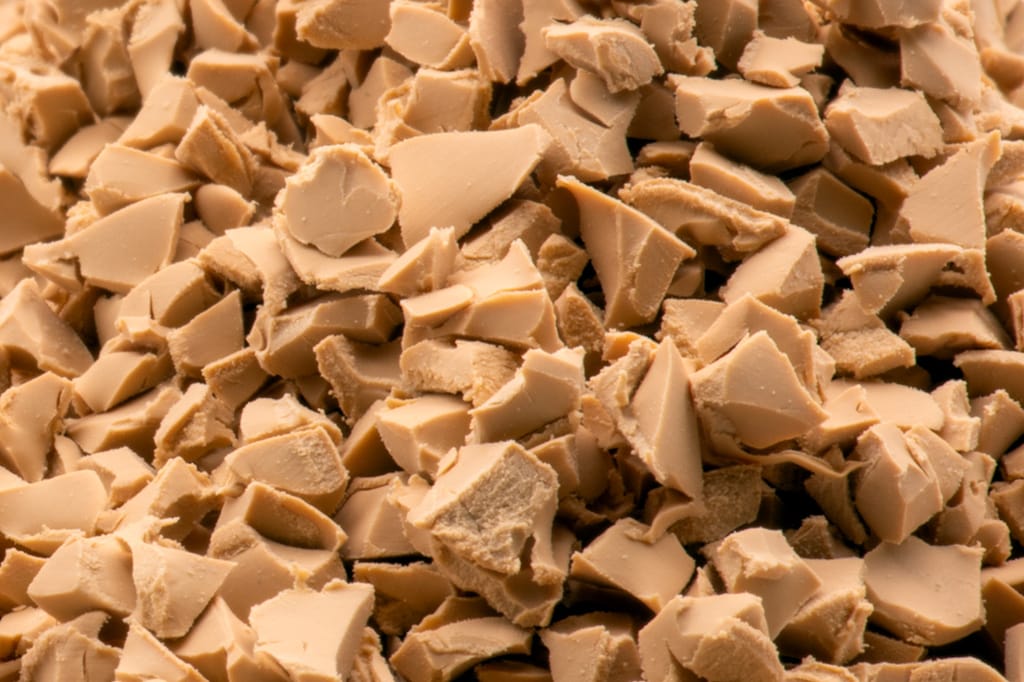
"TPV" is just as loose a label
"TPV" on a spec line can describe two fundamentally different materials. Most of what is sold globally as TPV granule is a thermoplastic blend — rubber particles dispersed in a plastic. Because part of it is plastic, it behaves like plastic where it hurts: it softens as surface temperatures climb, and it gives a polyurethane binder little to bond to.
Rosehill TPV® is not that material. It's a fully cured set rubber — a single-phase, peroxide-cured thermoset with no plastic phase — developed specifically for outdoor wetpour surfacing. It doesn't soften into a new shape in summer heat, and its surface is treated so granule and binder grip as one. Same three letters on the spec line; two different materials with two different fates.
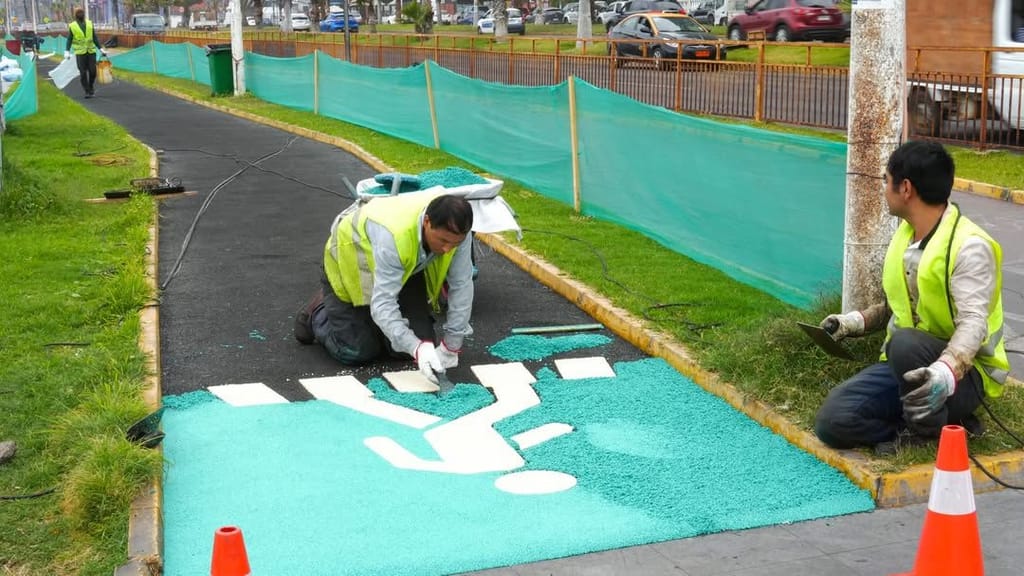

This isn't an abstract distinction. Play-surface temperatures of 70 °C are routine in hot climates, and the difference between a rubber that springs back and a blend that stays compressed is the difference between a compliant surface and a flattened one.

Stability is manufactured, not discovered
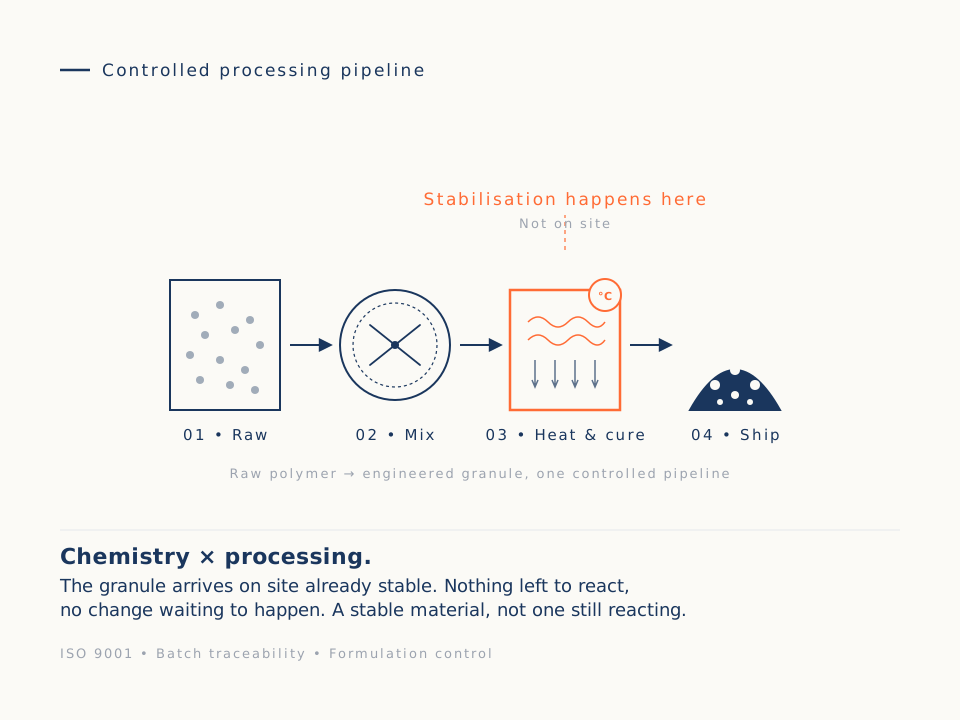
The other thing a category name can't tell you is how the granule is made — and manufacturing is half the story. A granule that arrives on site already in its final, stable state — colour formed through the rubber rather than coated on top, cured uniformly all the way through, consistent batch to batch — behaves predictably for years. A granule that's still chemically active keeps reacting in sunlight after it's laid: each reaction hardens it a little more, and hardened rubber never softens back.
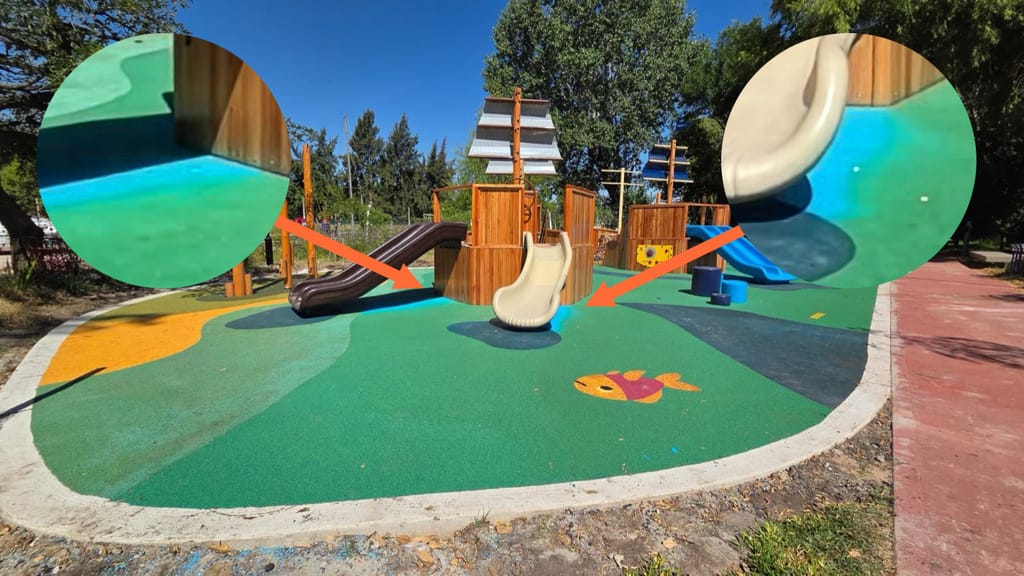
We make Rosehill TPV® on our own continuous process in Sowerby Bridge, to our own formulation, under one roof — which is why we can put the same recipe in the bag every time, and why installations from 2009 are still matching factory swatch cards seventeen years on. That's not a boast about us so much as a definition of what "a product" means: one controlled formulation, one process, one accountable manufacturer, one traceable performance history. A category has none of those things.
The questions that separate categories from products
You don't need a materials background to protect a project from category-name specification. You need seven questions:
- Who manufactures the material, and where?
- Is the formulation controlled and traceable to that manufacturer?
- What is the polymer content, and what fillers are used?
- What independent testing and ageing evidence exists — for this product, not its category?
- What comparable aged installations can be inspected?
- Is the material offered the same formulation as the material tested?
- What production controls ensure batch-to-batch consistency?
A genuine product has ready answers to all seven. A category-name quotation tends to go quiet somewhere around question three.
There are hundreds of EPDM producers and dozens of TPV producers. There is only one Rosehill TPV®.
Where to go from here. The full comparison — including the composite test data behind this argument — is shared in the Science of Performance CPD, delivered privately for your team. If you're weighing a substitution right now, use the Equivalence Assessment Checklist, or request a specification review at tpv.rosehill.group/book-a-cpd.
Josh Jones works in the technical team at Rosehill Sports & Play, part of Rosehill Group — a UK advanced-materials company that has formulated polyurethanes and rubber compounds for rail, highways, energy and defence since 1988. Every Rosehill TPV® granule is manufactured at Sowerby Bridge, West Yorkshire.