
“Or equivalent” is a perfectly good piece of specification machinery. It protects competition, it protects programmes when supply fails, and no responsible manufacturer should fear it. The problem is that in surfacing specifications it has quietly come to mean something else: “or anything with the same category name.”
Those are not the same thing at all. A named product is a controlled formulation with a traceable history. A category name — EPDM, TPV, SBR — covers hundreds of formulations that share a family resemblance and little else. When "or equivalent" is assessed by category name, the specification's carefully chosen product can be swapped for the cheapest distant relative that shares its initials, and the paperwork will say nothing happened.
Equivalence is a performance claim — so treat it like one
The fix isn't to delete "or equivalent" — most public procurement couldn't, and shouldn't. The fix is to define it. An equivalent material is one that demonstrates equivalent performance, with evidence, against the criteria that matter for the application. That turns a loophole into a test — one that a genuinely equivalent product can pass and a label-only substitute cannot.
For wetpour surfacing, those criteria are knowable and finite:
| Criterion | What equivalent actually means here |
|---|---|
| Composition | Comparable polymer content and type — not "mostly filler" wearing the same name |
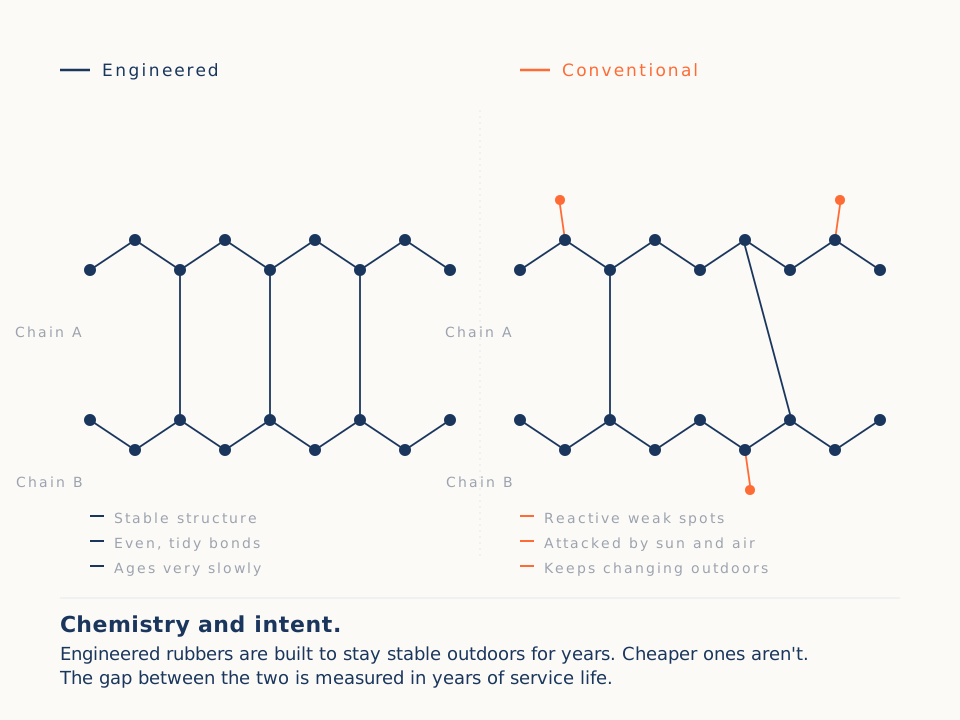
| Ageing & UV | Comparable accelerated-weathering results (e.g. EN 14836) and comparable real aged installations |
| Heat behaviour | Retains its structure and recovery at realistic surface temperatures |
| Elasticity retention | Stays elastic in service — no progressive hardening or embrittlement |
| Binder compatibility | Bonds properly with the specified binder, at the specified loading |
| Geometry & binder demand | Comparable granule geometry — different geometry changes the whole system's economics and strength |
| Composite performance | Equivalent results measured on the finished bound system (EN 12230, EN 1177), not the loose granule |
| Consistency | Production controls that deliver the same material batch after batch |
| Installed history | Named, dated, inspectable installations in comparable climates and uses |
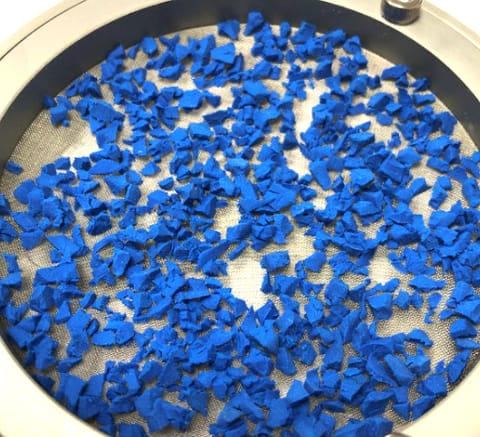
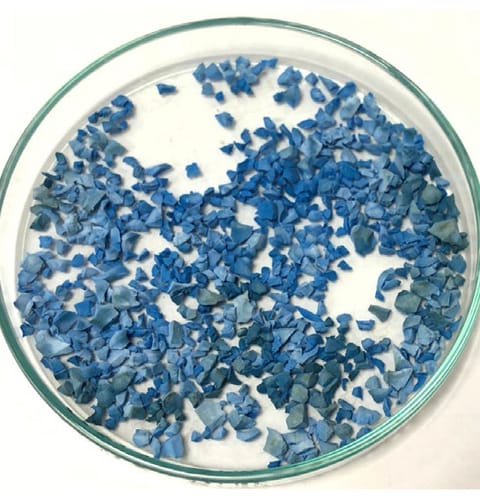
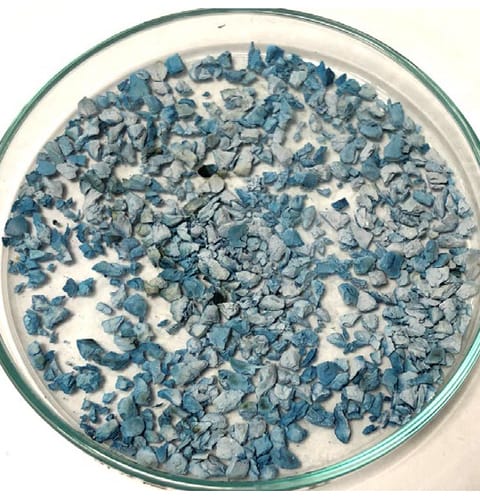
The burden of proof belongs to the substitution
One structural point does most of the work: whoever proposes the alternative supplies the evidence. The project team's job is not to disprove a substitution; it's to assess the evidence submitted for one. Writing that into the specification changes the economics of chancing it — a label-only substitute that must produce composite test data, weathering scores and dated installations before approval usually withdraws itself.
In practice, wording along these lines does the job (adapt to your form of contract):
Alternative materials will be considered only where the proposer submits, with the proposal: evidence of equivalent performance against each criterion above, measured on the finished bound composite where applicable; independent test reports for the specific product offered; confirmation that the supplied material is the same formulation as the tested material; and details of comparable installations of at least five years' age available for inspection. Assessment of equivalence rests with the specifier, and the category description of a material shall not, of itself, constitute evidence of equivalence.
Presented as guidance for writing your own clause, not as contract wording.
Three signs a substitution deserves a closer look
- The proposal leads with the price and the category name. A genuine equivalent leads with its evidence, because it has some.
- The data is for the granule, the sheet — or another product entirely. If the test reports don't name the exact product being offered, they aren't evidence for it.
- The service history is vague. "Widely used across Europe" is not a named site with a date on it. Products age in public; real history is easy to show.
What this protects
It's worth remembering what's actually at stake. The surfacing may be a small fraction of the capital cost, but it's the layer that carries the design intent, the safety function and the client's daily impression of the whole asset. A substitution assessed on its initials can quietly replace the one component the whole scheme is judged by. Defining equivalence properly costs a paragraph.
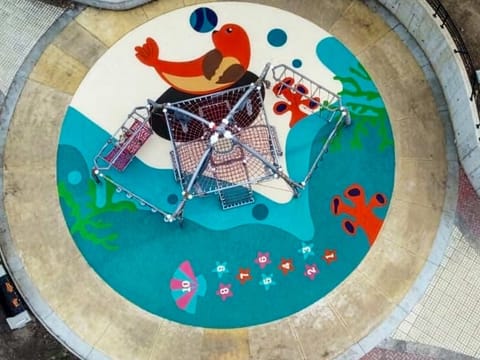
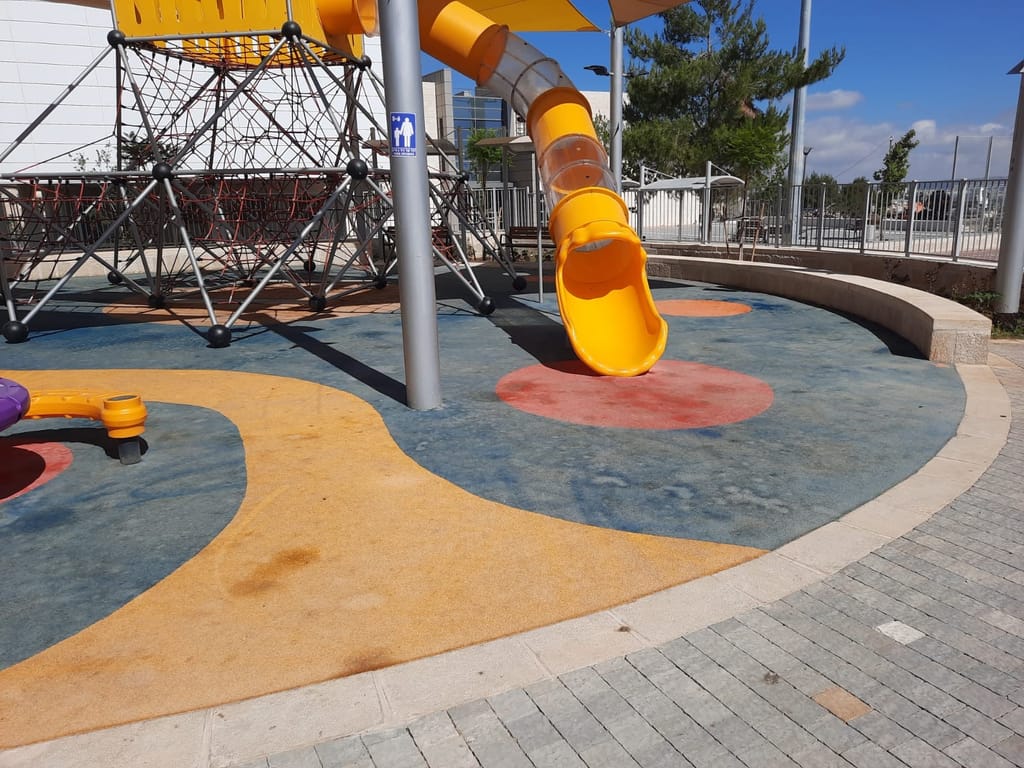
“Or equivalent” should be an invitation to demonstrate performance — not a discount code.
Putting this into practice. The Equivalence Assessment Checklist — a per-criterion question set with the evidence to request for each — is available at tpv.rosehill.group/science-of-performance. If you're assessing a proposed substitution now, we'll review it with you against these criteria, without charge — ask here.
Clare Riley works on specification support at Rosehill Sports & Play, part of Rosehill Group. She works with architects, landscape architects and local authorities on performance-led surfacing specifications. Every Rosehill TPV® granule is manufactured at Sowerby Bridge, West Yorkshire.