
Handover day is the easiest day in a wetpour surface's life. The colour matches the drawings, the surface feels right underfoot, the impact test passes, and everyone signs.
Here's the uncomfortable part: almost nothing about that day tells you whether the surface was specified correctly. Day One shows you how the surface was installed. It's the years afterwards that show you how it was specified.
The specification describes a day. The asset lives a decade.
Most wetpour specifications I read describe, in careful detail, what the surface must be at the moment of practical completion: the colours, the thickness, the critical fall height, the test to pass. What they rarely describe is what the surface must still be doing in year five, or year ten.
That's a strange gap, because a playground or sports surface is asked to do five jobs — stay safe, keep its design, hold up to weather and use, stay playable, and keep doing all four for the full life of the asset. Four of those jobs can only be judged over time. A specification that stops at handover has, in effect, specified one job out of five.
What time reveals
A surface can pass every handover check and still be quietly on its way to failure. The difference only becomes visible with exposure — to UV, heat, cold, moisture and footfall:
| Day One shows… | Time reveals… |
|---|---|
| Colour looks correct | Has the colour materially changed? |
| Surface feels elastic | Has it hardened or become brittle? |
| Granules appear secure | Is granule loss beginning? |
| Joints appear intact | Are cracks or shrinkage visible? |
| Impact performance passes | Has the system retained impact performance? |
| The client accepts the installation | Is the surface still meeting expectations? |

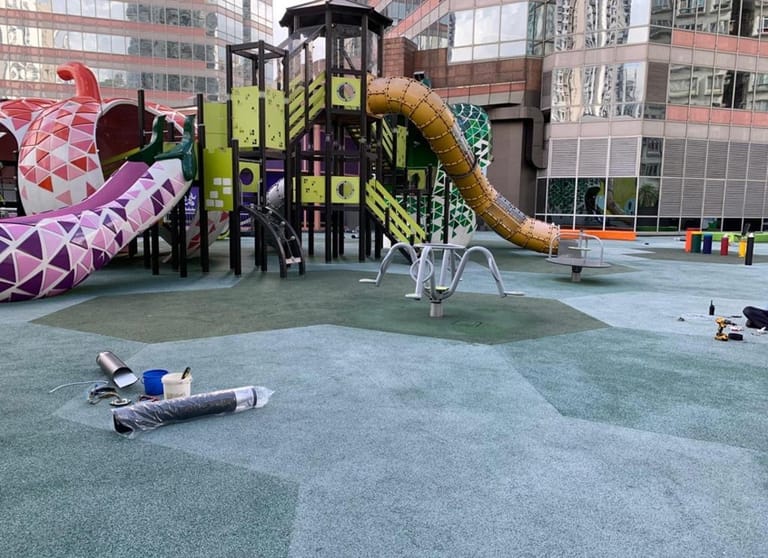
Every rubber ages outdoors — sunlight, heat and air act on all of it. The question is never whether a surface will age, but how quickly, how visibly, and where the degradation concentrates. Materials that look identical on install day can sit years apart on that curve, because ageing behaviour is set by the chemistry of the granule and the compatibility of the system — long before anyone arrives on site.
Some failures begin before installation
When a surface hardens, fades or cracks early, the instinct is to blame workmanship. Sometimes that's fair. But in my experience a large share of early failures were designed in at the specification stage, and no installer — however good — could have prevented them.
Three examples of decisions that are made on paper and paid for on site:
- The material clause names a category, not a product. "EPDM" or "TPV" on a spec line tells you very little about the formulation, the polymer content, or how the granule behaves after years of UV. Two materials carrying the same category name can age entirely differently.
- The binder wasn't matched to the material and setting. Binder choice affects colour behaviour, cure time and long-term bond. A binder-and-granule combination that works in one climate and colour scheme can visibly discolour in another — within days, not years.
- The system wasn't specified for the use. A quiet toddler area and a high-footfall destination playground can differ in loading by an order of magnitude. One thickness, one binder ratio and one granule geometry cannot be optimal for both.
The composite ages — so ask for evidence about the composite
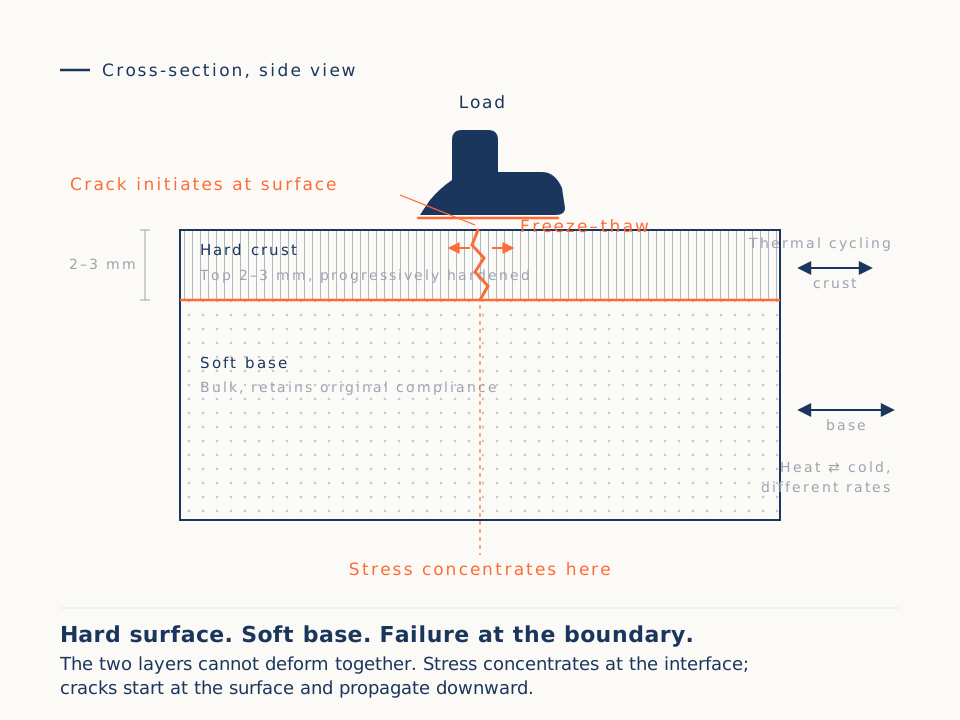
A wetpour surface isn't a bag of granules. It's granules, binder and the interface between them, mixed and laid on site as a seamless composite — and it's the composite that ages. As surfaces degrade, granule and binder begin to pull apart, and that interface is where cracks start.
This is why data measured on loose granules — or worse, on the rubber as a moulded sheet before it was ever granulated — tells you so little. The numbers that matter are measured on the finished, bound mix, the way it's actually installed. That's what standards like EN 12230 (tensile of the finished composite) exist for, and it's what BS 7188 sets minimums against.
Understanding the testing
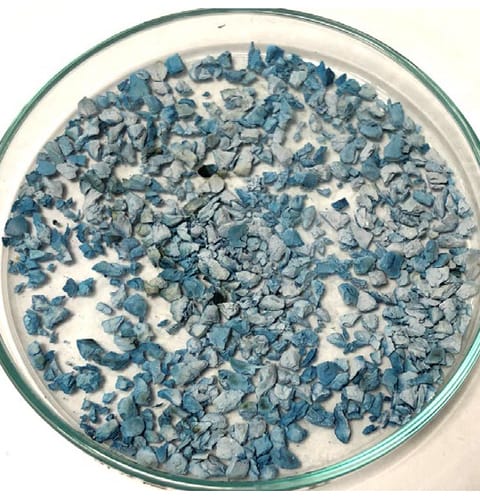
Weathering behaviour can be assessed before a surface is installed. EN 14836 provides a standardised method for artificial weathering, exposing samples to controlled conditions so that changes in their properties can be evaluated.
For colour, results can be reported using a grey scale from 1 to 5. Grade 5 represents no assessed colour change following the stated exposure; progressively lower grades indicate greater change.
On paper, grades 4 and 5 may sound similar. You might reasonably ask: why should I pay more for one point? The distinction is that, under the same exposure and assessment conditions, one sample showed a colour change while the other was assessed as unchanged. Where colour defines a playground's patterns, character and design intent, that difference deserves consideration.
However, the scale is not a percentage. Grade 4 does not mean 80% of the colour remains, and a grade 5 result does not promise that a material will never change. A single result also cannot tell us how quickly further change will occur.
That is why the useful questions go beyond the score: what exposure was used, which colour was tested, was it loose granule or a bound system, and are the results genuinely comparable?
Laboratory exposure cannot automatically be translated into a fixed number of years outdoors. It should be considered alongside documented installations, local conditions and the proposed granule-and-binder combination.
The value of testing is that it gives you evidence to question a specification — and a clearer basis for protecting the design over time.
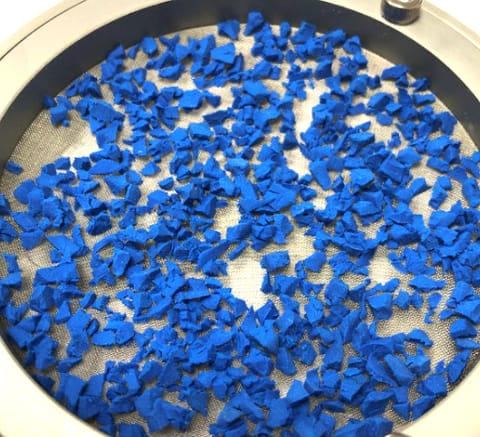
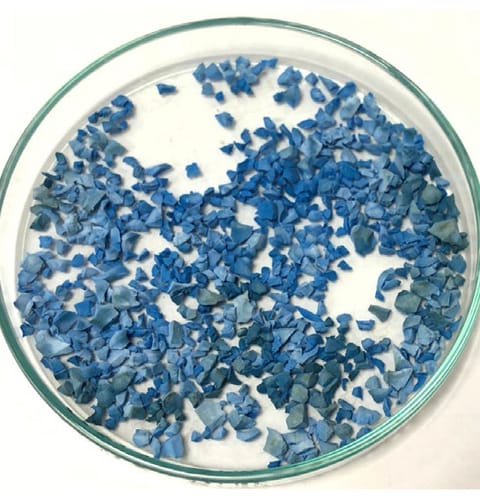
The evidence exists — for materials that can show it
The strongest evidence isn't accelerated at all: it's real surfaces, ageing in real service. We manufacture Rosehill TPV® in West Yorkshire and have watched it age across every significant climate zone for over 25 years. A Sydney surface installed in 2009 is in its seventeenth year and still matching factory swatch cards. A pocket park in Iquique, Chile — coastal desert, among the harshest UV environments on earth — looks the same after three Chilean summers as it did at handover.
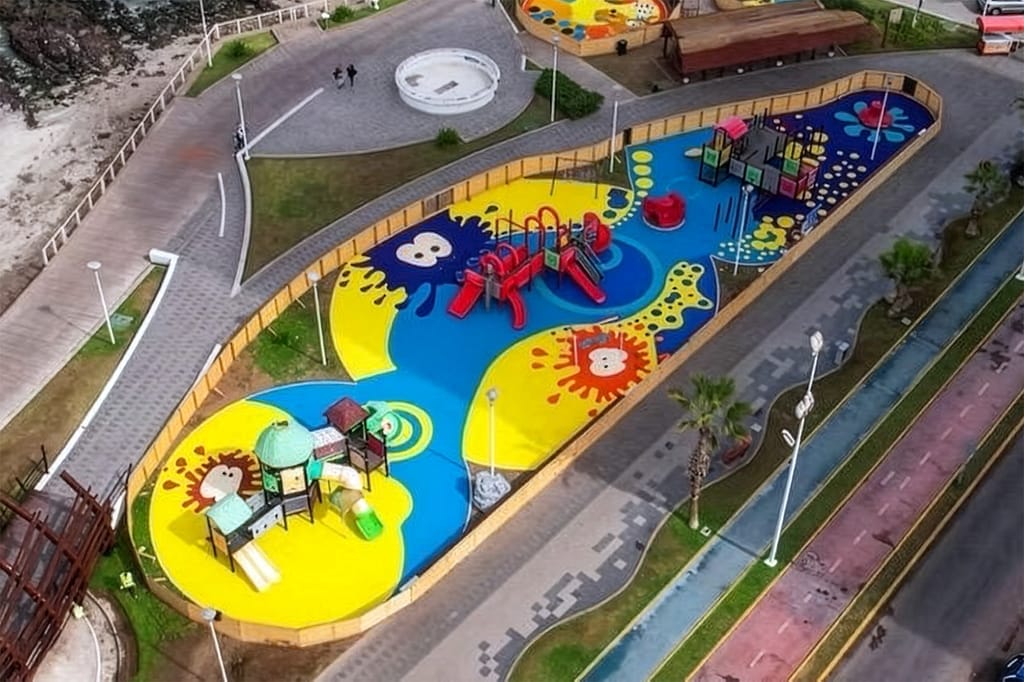
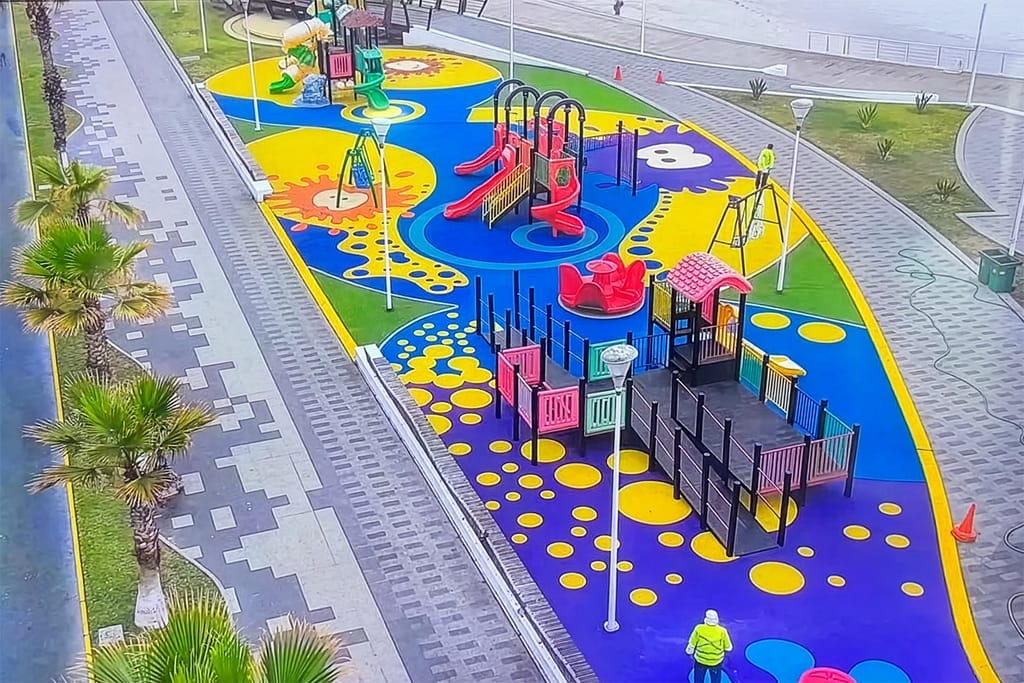
I'm not quoting those examples to say "buy ours" — I'm quoting them to make a general point: aged, comparable installations are evidence a specifier can ask any supplier for. If a material has a genuine service history, its manufacturer will be delighted to show you. If the answer is a day-one datasheet and a category name, that silence is also information.
What a longevity specification asks for
None of this requires a longer specification — just a differently pointed one. In practice it means writing the specification to ask for:
- a named product and manufacturer, not a material category;
- aged installations in a comparable climate and use, ideally inspectable;
- test evidence measured on the finished composite, not the loose granule or sheet;
- weathering evidence (accelerated ageing such as EN 14836, alongside real-world history);
- a binder and system specification matched to the material, colours, climate and application;
- retained-performance expectations — what the surface should still be doing, not just what it passes at handover.
Day One shows how a surface was installed. Every year afterwards shows how it was specified.
Where to go from here. The evidence behind this article is delivered in full as a private CPD session, and we review live surfacing specifications with project teams at no charge. Book either at tpv.rosehill.group/book-a-cpd, or read the Longevity Specification Checklist.
Josh Jones works in the technical team at Rosehill Sports & Play, part of Rosehill Group — a UK advanced-materials company that has formulated polyurethanes and rubber compounds for rail, highways, energy and defence since 1988. Every Rosehill TPV® granule is manufactured at Sowerby Bridge, West Yorkshire.