
Wetpour is usually one line in a much larger project — a small percentage of the capital cost, approved late, under time pressure. But it's the layer every visitor sees, touches and judges, and when it fails, the whole scheme reads as failed.
The awkward truth is that most of the wetpour failures we're asked to look at were approvable failures: the specification looked complete, said the right-sounding words, and contained nothing that would have caught the problem. Here are the five demands I'd make of any wetpour specification before signing it off — each one is a question you're entitled to ask, and each has a recognisable good answer.
1. Specify performance, not a material category
"EPDM" or "TPV" alone does not define how a surface will perform. Within each family, hundreds of producers make granules that differ in polymer content, fillers, pigments, manufacturing process and — critically — how they age. A category name on a spec line tells you which family the material belongs to; it says nothing about what the finished surface will do in service.
Demand: the specification defines the performance the surface must deliver — impact attenuation, composite strength, colour stability, retained elasticity — and the evidence that supports each requirement. The proposed product and manufacturer should still be identified for traceability, with any alternative assessed against the same performance requirements (more on that in Chapter 2 of this series).
A good answer looks like: performance requirements written into the specification with the test standards stated, a named product and manufacturer identified against them for traceability, and a clear process for assessing any alternative on the same terms.
2. Evidence from aged installations in a comparable climate
Laboratory testing and documented service history provide complementary evidence. Any material with a genuine track record has surfaces in the ground that have been ageing for years, and its manufacturer can tell you where they are, when they were installed, and what they look like now.
Demand: named, dated installations of the proposed material, in a climate and usage comparable to your project — old enough to be meaningful. Five years is a reasonable floor; more is better.
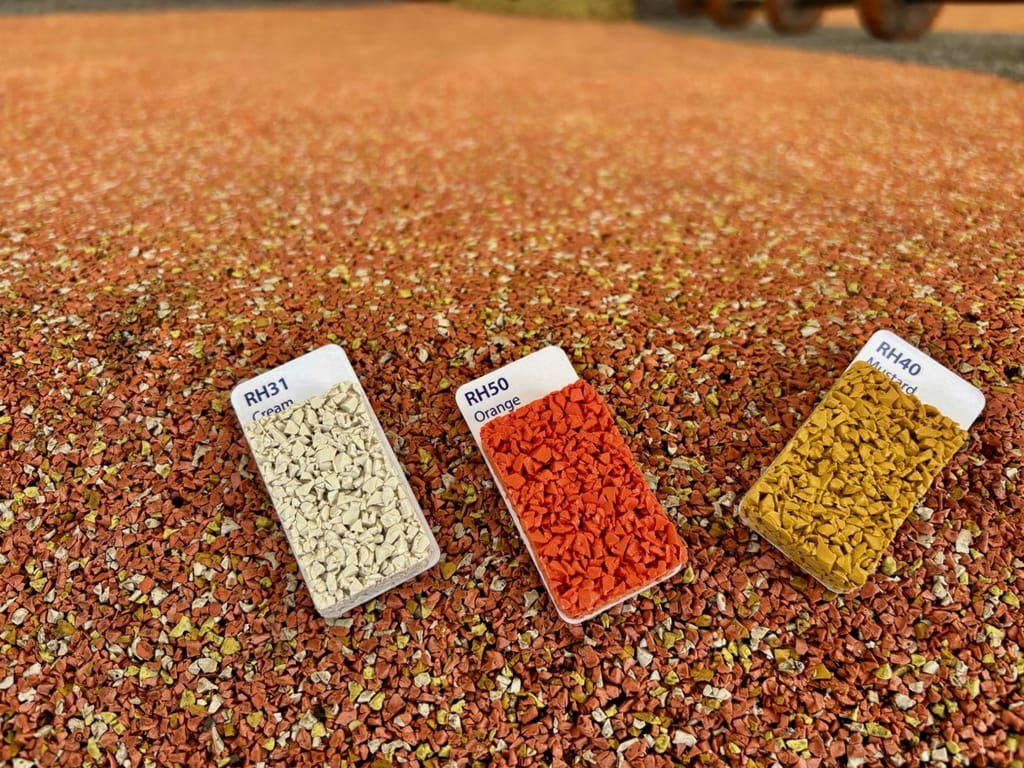
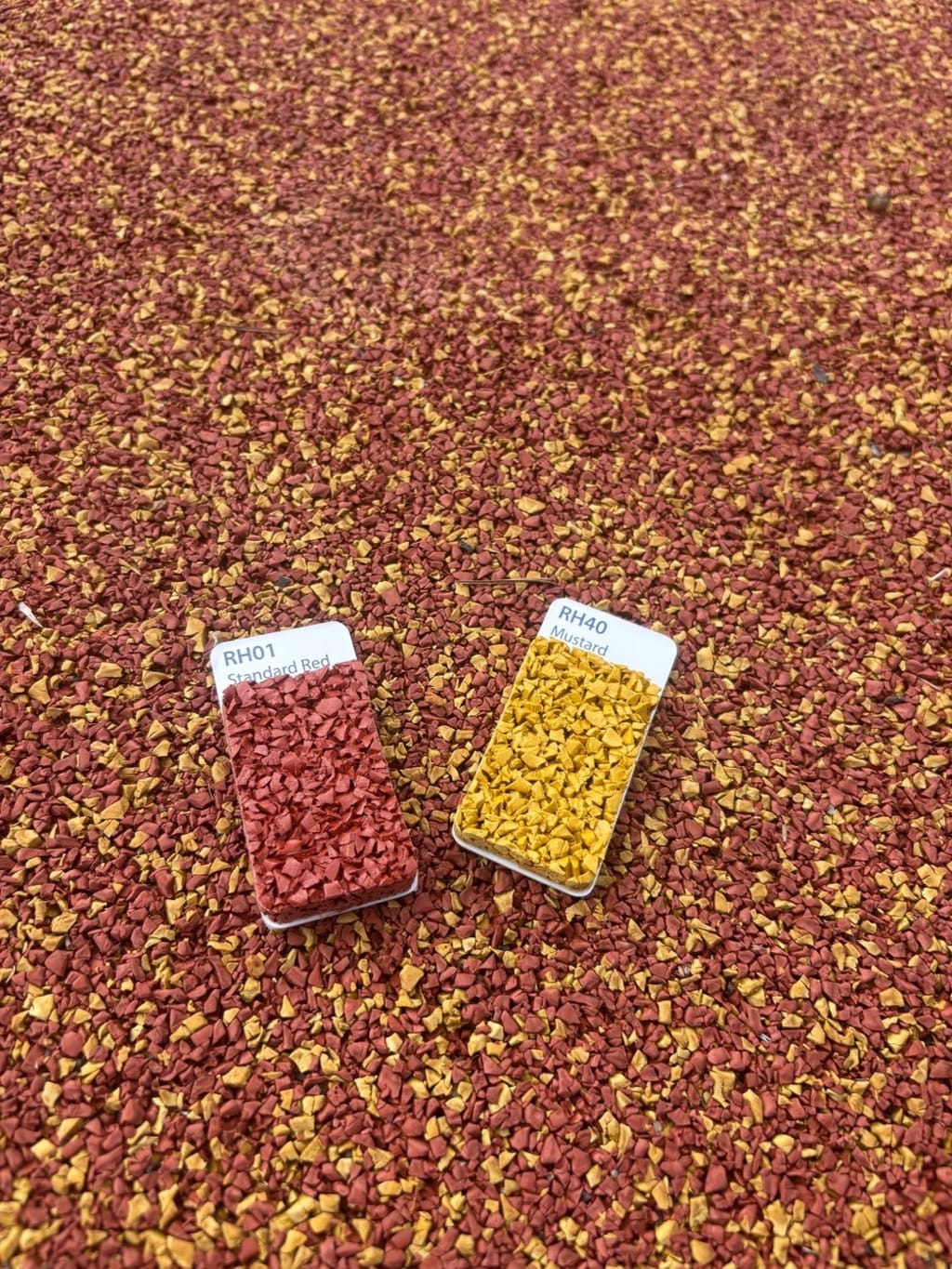
A good answer looks like: "Installed year, at place, still in service — here are current photographs, and you're welcome to visit." Vague references to "extensive global experience" without a single dated site are not evidence.
Current photographs and site visits can demonstrate retained appearance and visible condition, but they do not replace testing of impact performance.
3. Test data measured on the finished composite, not the loose granule
Your client's users will never touch a loose granule. What they walk on is the finished composite — granule and binder bound together on the day of installation. It's the composite that takes the load, and the composite that has to last. Data quoted for the raw rubber — or for a moulded test sheet that never saw a granulator — can make a material look far better than the surface it becomes.
Demand: performance figures measured on the bound, finished system — composite tensile to EN 12230 with the binder type and loading stated, impact attenuation to EN 1177 on the system build-up you're actually specifying.
A good answer looks like: composite results, with the test standard, binder ratio and system thickness stated alongside. If every number on the datasheet is for the granule alone, ask why.
4. A binder and system matched to the material, colours and climate
The granule is only part of the surface. Binder selection determines colour behaviour in sunlight, cure time, weather-window risk during installation, and the long-term bond that holds the surface together. The binder-and-granule combination that's right for one project can be visibly wrong for another.
Demand: the specification states the binder type and loading, confirms compatibility with the specified granule (ideally from the same technical source), and reflects the project's climate, colours and site constraints — not a copy-paste from the last job.
A good answer looks like: a granule manufacturer who will talk about binder in the same conversation, and can explain why this binder, at this ratio, for this project.
A UV-stable granule with strong, deep colour may give you more flexibility to consider an aromatic binder, but it does not prevent the binder itself from yellowing. The question is whether an aliphatic binder is needed for the selected colours, exposure and visual expectations — so ask for evidence of how the complete granule-and-binder combination will look over time, not the granule alone.

5. Retained-performance criteria written into the specification
This is the one that separates a handover specification from a longevity specification. A specification focused only on handover leaves long-term performance expectations insufficiently defined. Clear expectations for how the surface should perform in service, supported by testing and documented service history, give the client something to measure against later.
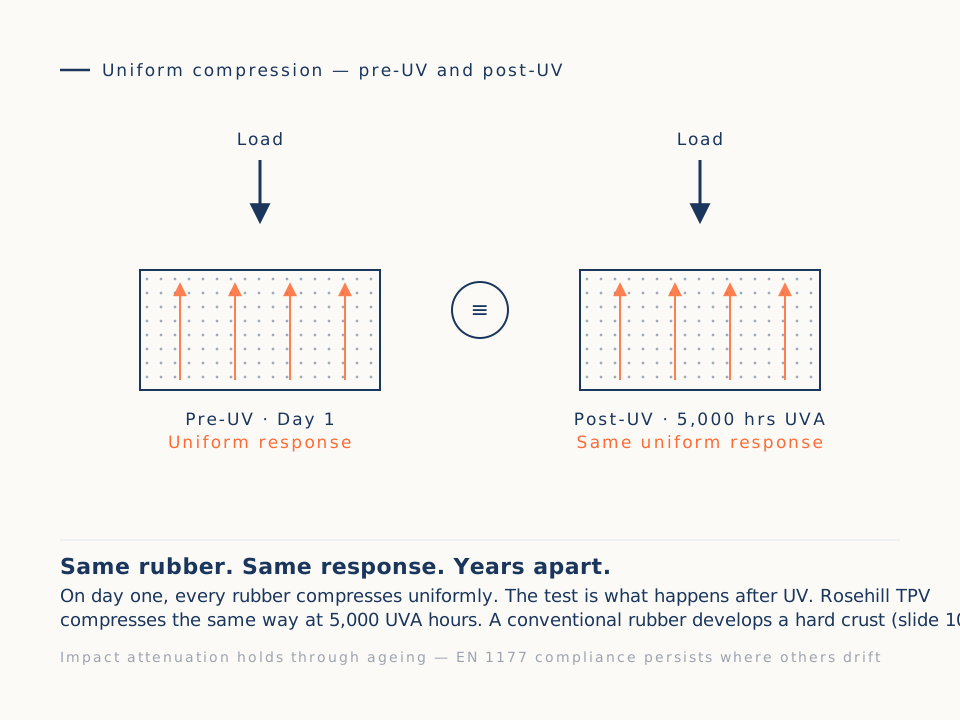
Demand: the specification describes what the surface should still be doing in service: colour stability expectations (with accelerated-weathering evidence such as EN 14836 scores, supported by real aged sites), retained elasticity rather than progressive hardening, granule retention, and continued impact performance.
A good answer looks like: a supplier willing to put year-five behaviour in writing and show you the evidence behind it. Materials genuinely engineered for outdoor service can support this; materials adapted to it rarely put anything in writing.
The five, on one page
| Demand | The evidence to ask for | |
|---|---|---|
| 1 | Performance requirements, not a category | Defined performance criteria with supporting evidence; product and manufacturer identified for traceability; alternatives assessed on the same basis |
| 2 | Aged evidence, comparable climate | Named, dated installations; current photos; site visits |
| 3 | Composite test data | EN 12230 composite tensile; EN 1177 on the specified build-up |
| 4 | Matched binder and system | Binder type/loading, compatibility confirmation, climate rationale |
| 5 | Retained-performance criteria | EN 14836 weathering scores; real ageing history; written year-five expectations |
These five questions help clients assess long-term value before approving a specification.
Putting this into practice. We deliver the full Science of Performance evidence base as a private CPD session for practices and project teams — and if you have a live specification on your desk, we'll review it with you, project-specifically and without charge. Book either at tpv.rosehill.group/book-a-cpd.
Clare Riley works on specification support at Rosehill Sports & Play, part of Rosehill Group — a UK advanced-materials company manufacturing Rosehill TPV® in Sowerby Bridge, West Yorkshire for more than twenty-five years. She works with architects, landscape architects and local authorities on performance-led surfacing specifications.