
Here's a sentence you won't often hear from a granule manufacturer: a great granule can still produce a poor surface.
It's true, though. I've seen quality material let down by the system around it — the wrong binder, the wrong thickness for the loading, a cure window that never stood a chance against the weather. And I've seen the reverse belief cause even more damage: the idea that a good enough granule, or failing that a bit more binder, can rescue a system that was never designed as one.
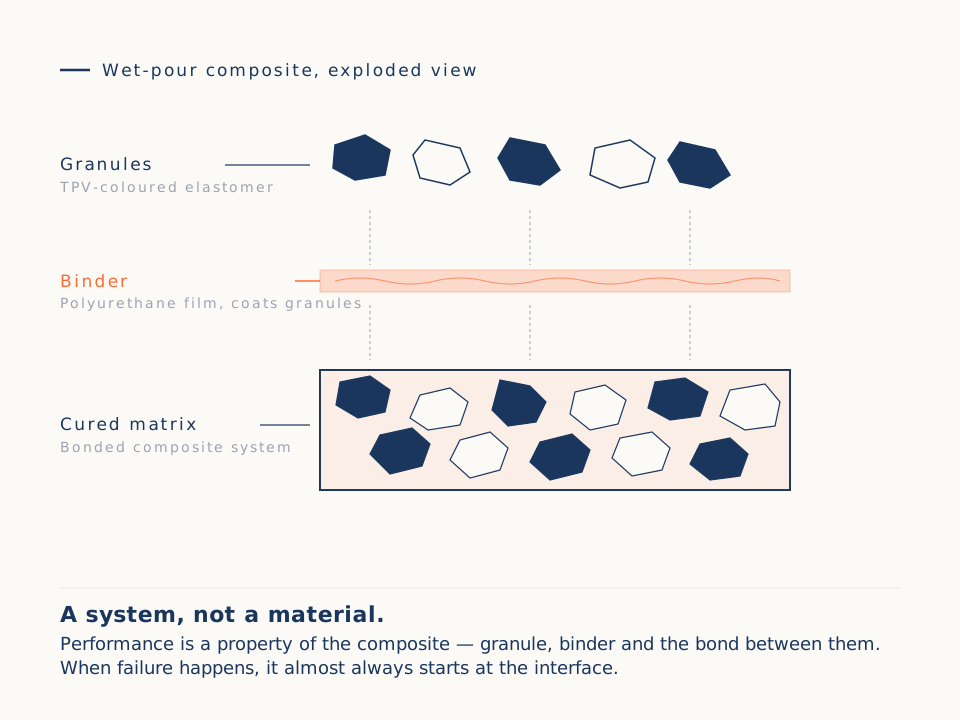
The specification decision isn't a granule decision. Nobody plays on granules. They play on a composite — and the composite is what you're really specifying.
A surface is five decisions that have to agree
Wetpour is mixed on site from coloured rubber granules and a polyurethane binder, and trowelled out as a seamless composite. What the client gets is the product of five things working together:
granule × binder × installation × application × environment
Change any one and you've changed the surface. The same granule with a different binder loading is a different composite. The same composite under splashpad conditions is doing a different job than it does beside a school entrance. A specification that fixes one factor and leaves the rest to chance hasn't specified a surface; it's specified an ingredient.
Why loose-granule data can't describe the surface
The numbers that matter — how much load the surface takes before it lets go, how much it flexes first, how it cushions a fall — belong to the finished mix, laid the way it's actually laid. That's why the meaningful tests are composite tests: EN 12230 for the tensile of the bound mix, EN 1177 for impact on the actual build-up. Data for the loose granule, or for the rubber as a moulded sheet before granulation, can flatter a material enormously while telling you almost nothing about the surface.
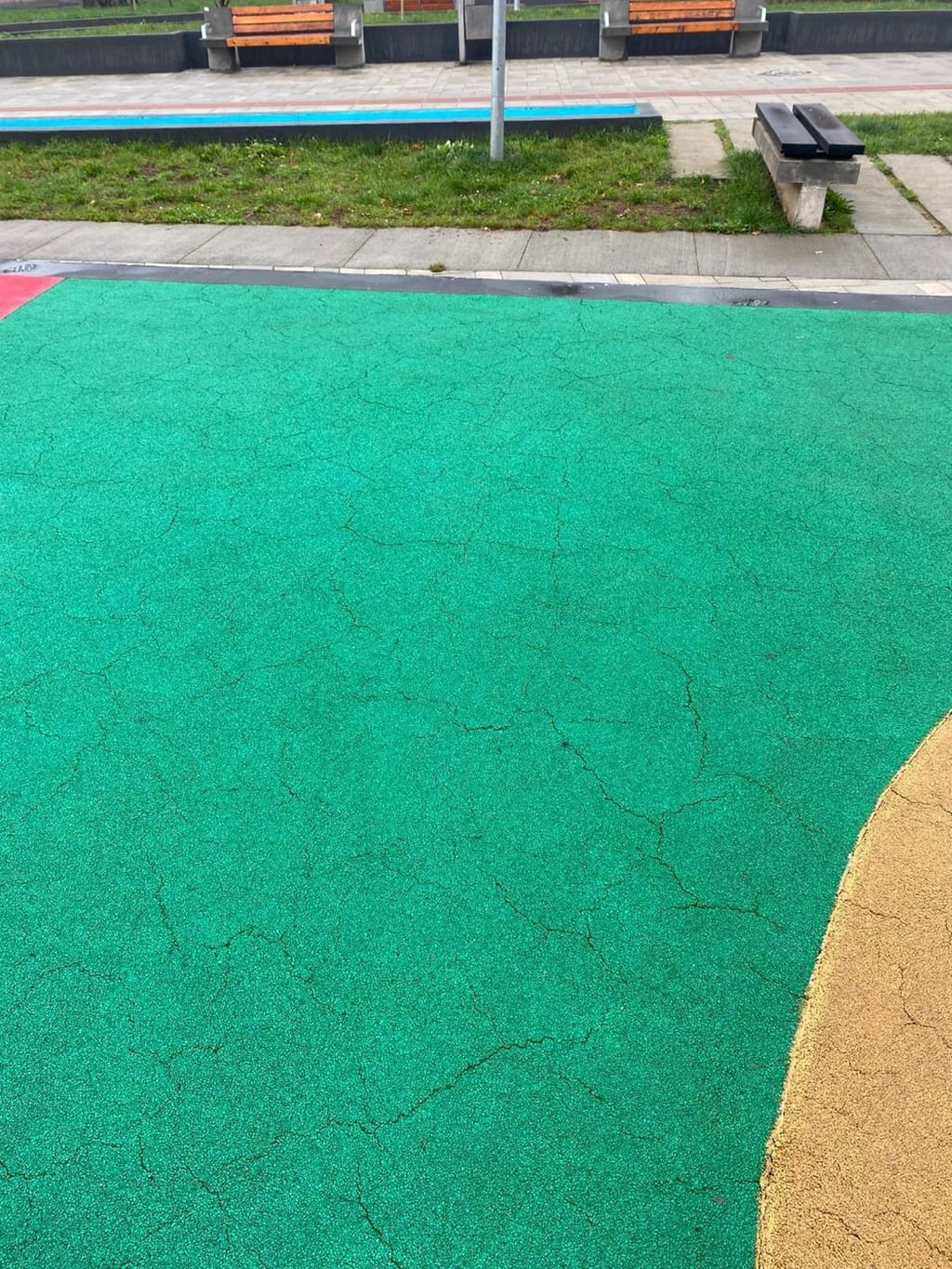
And as any surface ages, it's the composite that degrades: granule and binder begin to pull apart, and that interface is where cracks start. The granule–binder bond isn't a detail of the system. Over a ten-year life, it more or less is the system.

More binder is not a design
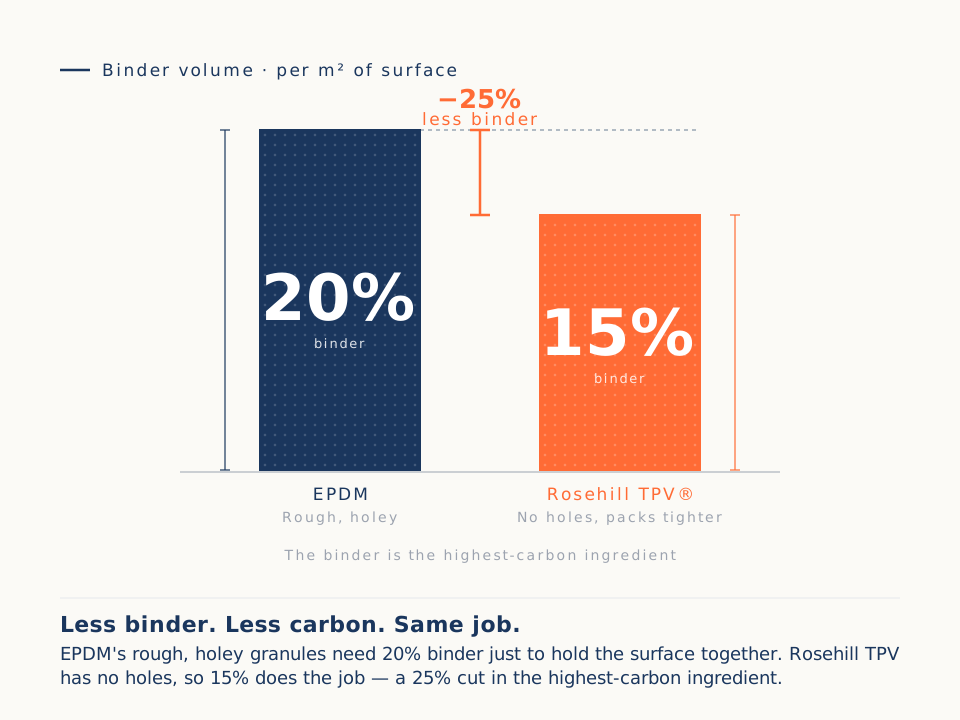
The most common system-level mistake is treating binder as a volume knob: if the surface seems fragile, add more. But binder can only strengthen what it can grip. A granule with a dusty, high-surface-area face consumes binder coating fines instead of bonding structure; a granule with plastic in its chemistry gives polyurethane little to hold at all. Past a point, extra binder just costs more and performs the same — the ceiling is set by the granule's chemistry and surface, not by the pump.
The reverse is also true, and more interesting for specifiers: a granule engineered to bond efficiently needs less binder to reach a given performance — and since binder is the highest-carbon ingredient in the surface, an efficient system is also a lower-carbon and lower-cost one. Binder ratio is a genuine design variable. It deserves to be specified, not defaulted.
Geometry is a structural decision
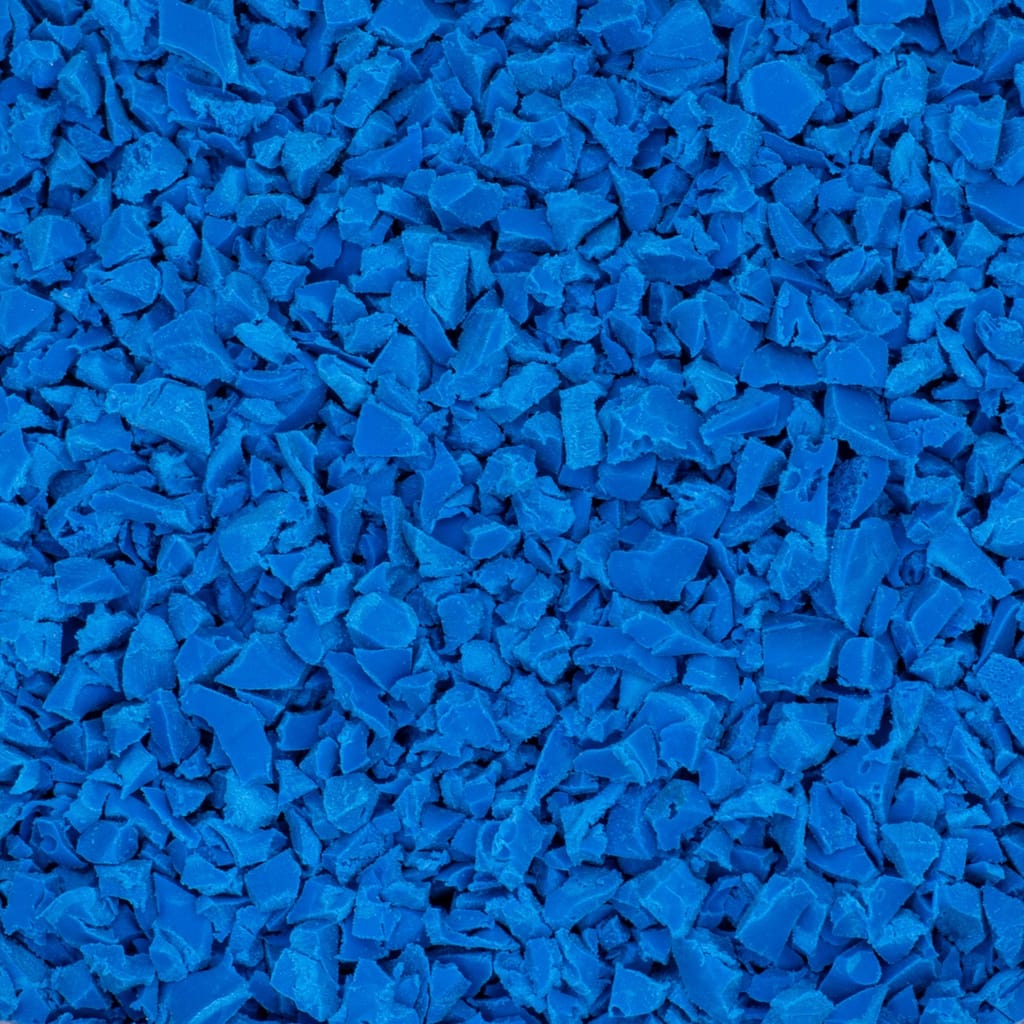
Granule size sounds like an aesthetic choice. It isn't. Smaller granules pack more tightly, giving the binder more contact area to bond across — a denser matrix, and a stronger composite at the same binder ratio. Coarser granules leave bigger voids that binder fills passively. Neither is "right": they're different structures suited to different loadings. But it means grading and geometry belong in the specification alongside colour, because they change what the finished surface is.

Installation and environment finish the design
Two system factors are decided last but matter as much:
- Installation conditions. Wetpour cures on site, in whatever weather the programme allows. Cure time, temperature and moisture windows are properties of the specified system — a system with a three-day open cure carries three days of weather risk that a faster-curing system doesn't. That risk should be chosen, not discovered.
- Environment and movement. Rubber expands in heat and contracts in cold; every day–night cycle works the joints and the surface. Layout, jointing and the surface's own thermal behaviour interact for the life of the asset. A hot-climate splashpad and a shaded UK schoolyard are not the same engineering problem, and shouldn't get the same paragraph.
What "specifying the system" looks like in practice
Concretely, a system specification states: the named granule and the named binder, the binder loading, the granule grading, the thickness for the actual use, the composite performance required (EN 12230, EN 1177 on that build-up), the curing requirements, and the evidence expected for all of it. Eight lines, perhaps. The difference those lines make is the difference between owning a designed composite and owning whatever the lowest quote assembled from parts.
You are not specifying a bag of granules. You are specifying a surface system — and the system is what your client will stand on for the next fifteen years.
Where to go from here. Chapter 3's companion piece looks at matching the specification to the application — why a splashpad, a MUGA and a toddler area shouldn't share a spec. For project-specific help designing the whole system — granule, binder, thickness, testing — talk to us at tpv.rosehill.group/science-of-performance.
Josh Jones works in the technical team at Rosehill Sports & Play, part of Rosehill Group — a UK advanced-materials company that has formulated polyurethanes and rubber compounds for rail, highways, energy and defence since 1988. Rosehill manufactures both Rosehill TPV® granules and Flexilon® binders, which is why we design them to work as one system.