
One surface, three names
Wetpour, poured-in-place or softfall: what you call it depends on where you are
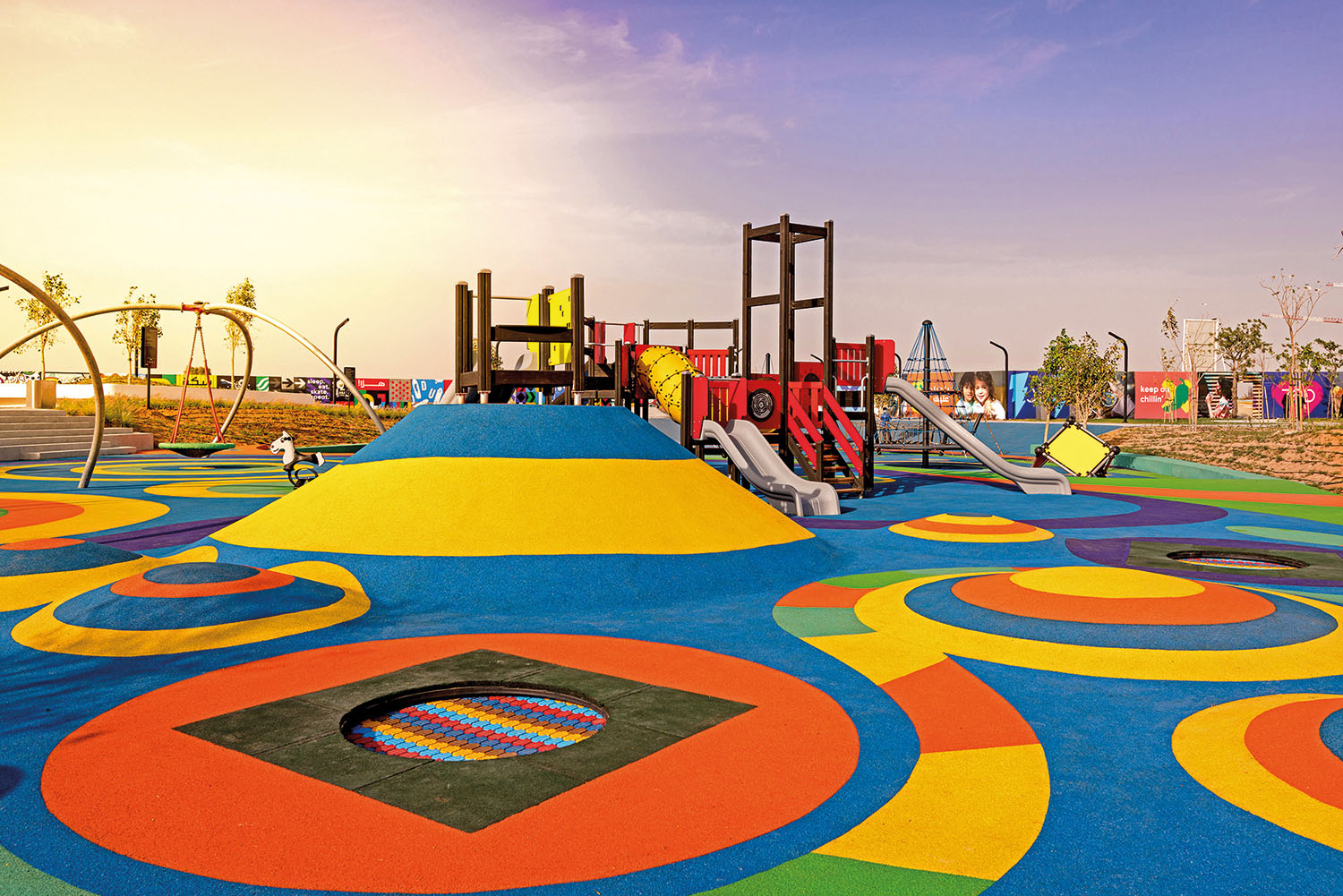
It is the same thing everywhere: a seamless, cushioning rubber surface mixed and laid on site. A shock-absorbing base layer sits under a coloured wearing layer of rubber granules held together with polyurethane binder.
UK & Ireland
Wetpour
Also written wet pour or wet-pour. The usual term on UK playground and park specifications.
USA & Canada
Poured-in-place rubber
Often shortened to PIP or poured rubber. The same two-layer system, mixed and troweled on site.
Australia & New Zealand
Softfall
Rubber softfall or wetpour softfall, to tell it apart from loose softfall such as bark or mulch.
How it is built
Two layers, laid in one place
A specialist installer mixes granules and binder on site and trowels them over a prepared sub-base, so the finished surface has no joints and no loose fill.
- Base layer. Sets the impact protection. Its depth follows the critical fall height of the equipment above it, under the standard that applies where you are (EN 1177 in Europe).
- Wearing layer. The coloured top surface people see, play on and wear. With Rosehill TPV® it is typically bound with 15–18% Flexilon® binder.
- Seamless finish. Colour zones, games and graphics are laid into the surface, with no loose fill to top up.
Why the top granule matters
The wearing layer decides how the surface ages
Every compliant surface looks good on handover day. What differs is how the top layer behaves after years of sun, heat and use, and that comes down to the granule.
- Colour that lasts. The colour is formed through each granule during manufacture, not coated on. In accelerated UV testing to EN 14836, all 20 colours tested held Greyscale 5 (no visible change) as loose granules after 9,600 kJ.
- Stays flexible. Rosehill TPV® leaves our plant fully cured, so it has little left to react outdoors and resists the gradual stiffening that can make rubber surfaces crack.
- Strength you can specify. In independent tests to EN 12230, the granule-and-binder composite reached 0.522, 0.624 and 0.702 MPa at 12, 15 and 18% binder, above the 0.4 MPa benchmark commonly cited for wearing courses.
- Tested to EN 71-3, the toy safety standard, and made under ISO 9001 with a batch number on every bag.
Design
21 colours, or your own blend
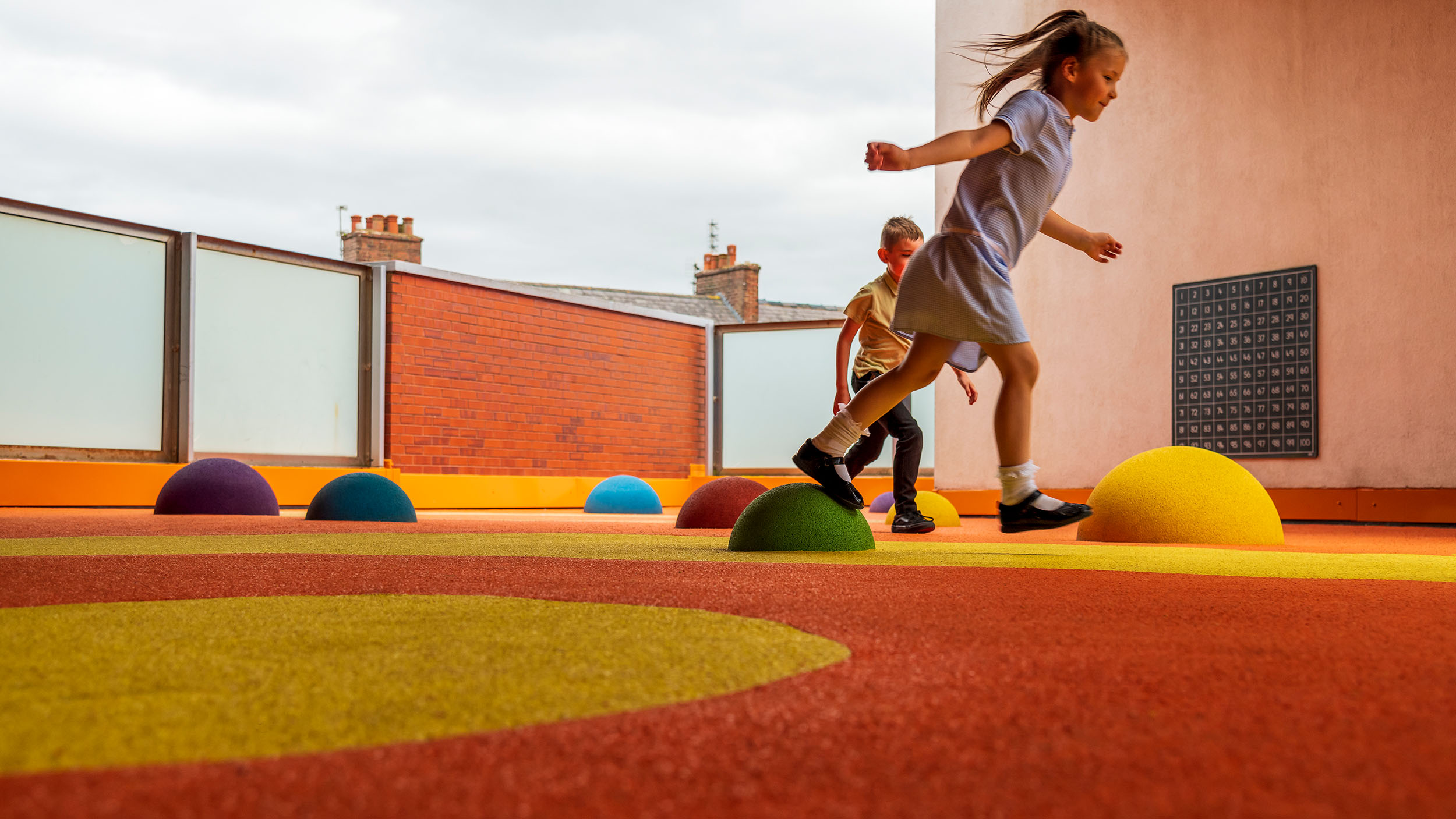
Choose from 21 standard colours or mix them into a blend of your own. Zones, paths, hopscotch, rivers and themed graphics are all laid into the surface.
- Preview any blend as a poured surface in the online colour mixer
- Every blend gets a shareable mix code and a PDF with material quantities
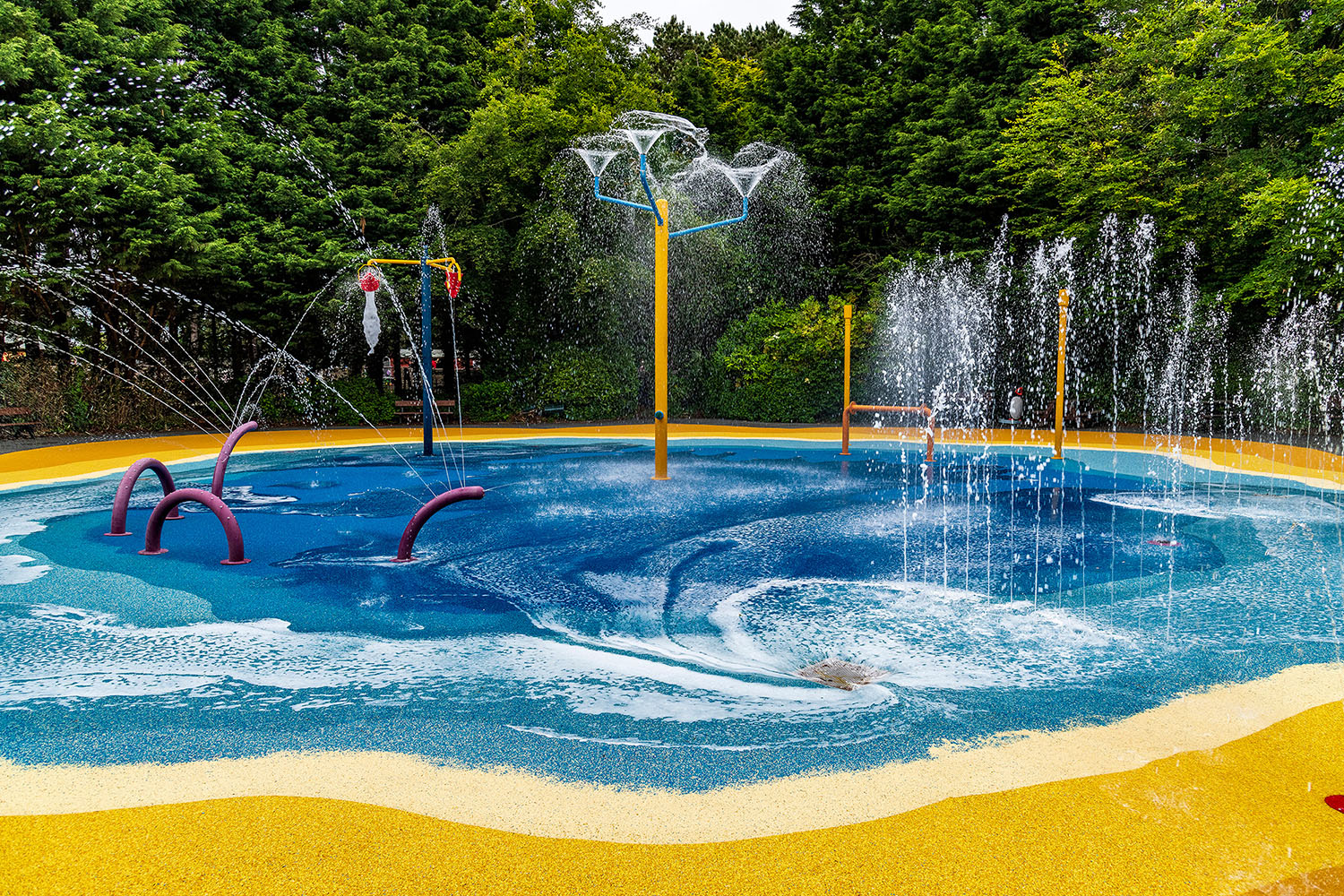
- The same granule for play areas, splash pads, courts and paths, so a whole site can match
Where it is used
Beyond the playground
See it in place: around 240 published projects in more than 20 countries, each with photos and location.
Questions
Playground surfacing FAQ
What is wetpour?
Wetpour is a seamless rubber safety surface mixed and laid on site: a cushioning base layer under a coloured wearing layer of rubber granules bound with polyurethane binder. In the US the same system is called poured-in-place rubber, and in Australia rubber softfall.
How thick does a playground surface need to be?
It depends on the critical fall height of the equipment above it. The installer sets the base layer depth to meet the standard that applies where you are (EN 1177 in Europe), and the surface should be checked by regular inspection and testing.
Is poured-in-place rubber better than rubber mulch?
They suit different budgets and sites. Loose fill such as rubber mulch moves around and needs topping up. A poured-in-place surface is seamless, has no loose fill to top up and can carry colour zones and graphics.
How long does a wetpour surface last?
It depends on use, installation and environment. Rosehill TPV® surfaces are still in use after 17 years, including a Sydney playground surfaced in 2009. As with any safety surface, impact protection should be checked by regular inspection and testing.
Will the colour fade?
Rosehill TPV® keeps its colour. In accelerated UV testing to EN 14836, all 20 colours tested showed no visible change. Every outdoor surface weathers a little, and the binder film can change colour over time, but the granule’s colour runs right through.
What is the difference between EPDM and TPV granules?
Both can give a compliant surface at installation; the difference is long-term behaviour. Conventional EPDM can keep hardening outdoors, mostly at the exposed surface, and a top that hardens faster than the layer beneath can crack. Rosehill TPV® leaves manufacture fully cured, so it stays flexible. Note that “TPV” on a specification can also mean TPE-V, a thermoplastic blend with rubber held in polypropylene. Rosehill TPV® is a different material: a single-phase, peroxide-cured thermoset rubber with no polypropylene.
Can I buy Rosehill TPV® direct, or who installs it?
Rosehill TPV® is specified by architects, landscape architects and councils, supplied through local distributors and laid by specialist installers. Tell us where your project is and we will put you in touch with a supplier.